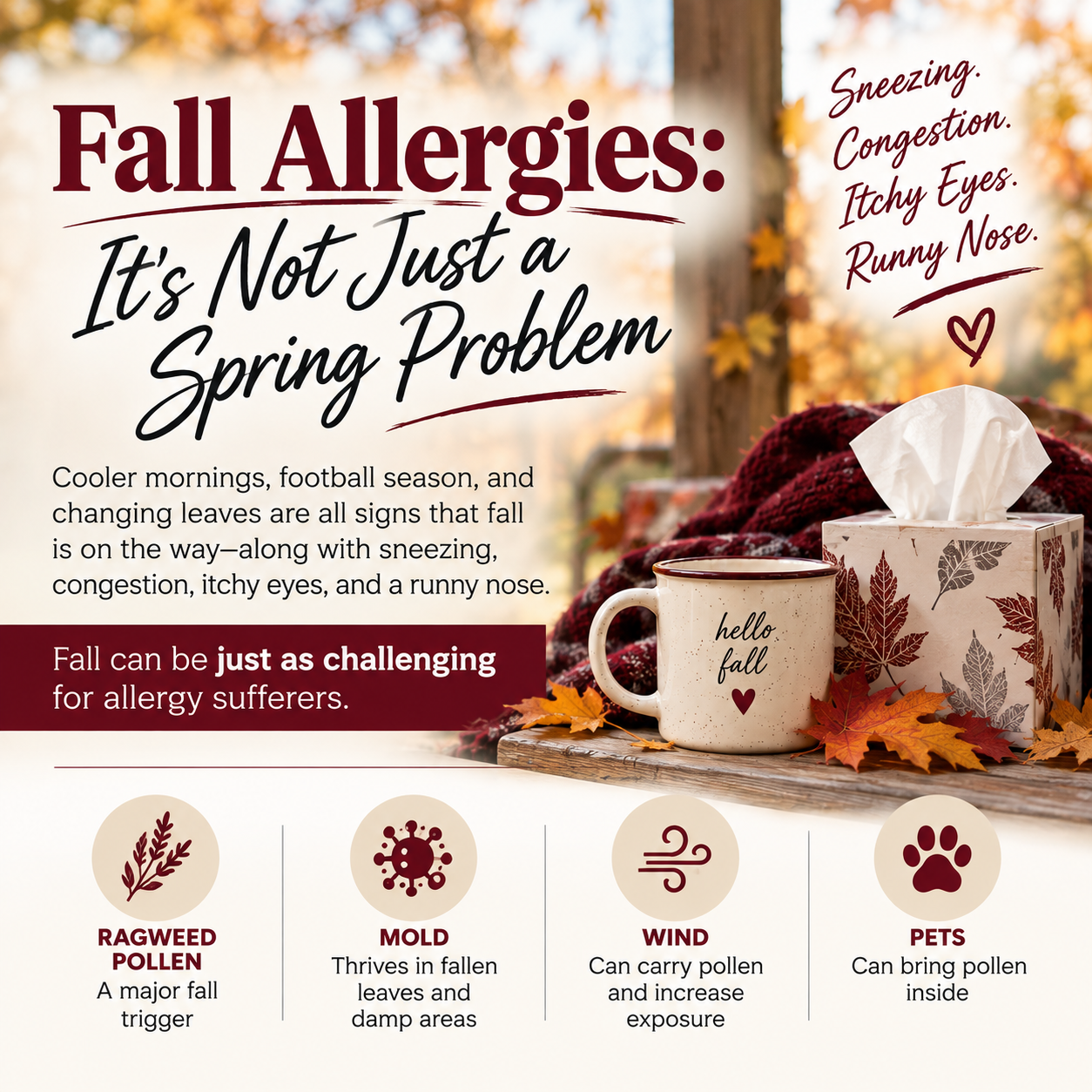
Cooler mornings, football season, and changing leaves are all signs that fall is on the way, but for many people, so are sneezing, congestion, itchy eyes, and a runny nose.
While spring gets most of the attention when it comes to seasonal allergies, Oklahoma’s fall allergy season can be just as challenging.
The good news? Understanding what’s triggering your symptoms, and knowing which allergy treatments may help, can make the season much more enjoyable.
What Causes Fall Allergies?
One of the biggest fall allergy triggers is ragweed pollen. Ragweed typically begins releasing pollen in late summer and can continue until the first hard freeze.
And if you live in Oklahoma, you know we rarely have a shortage of windy days.
Dry, windy weather can carry pollen through the air and increase your exposure, even if you don’t have ragweed growing right outside your home.
Mold can also contribute to fall allergy symptoms. Outdoor mold can thrive around damp leaves, grass, and other decaying plant material that collects during the fall.
A Few Ways to Reduce Your Exposure
You may not be able to completely avoid fall allergens, but a few simple habits can help reduce how much pollen and mold you encounter:
- Keep windows closed on high-pollen or windy days.
- Change clothes after spending a lot of time outdoors.
- Shower before bed to remove pollen from your hair and skin.
- Replace your home’s air filters regularly.
- Avoid letting piles of wet leaves accumulate around your home.
- Check local pollen counts and consider limiting extended outdoor activity when counts are particularly high.
- Wipe down pets after they’ve spent time outside, especially after being in grass or weeds.
Sometimes a few small changes can make allergy season a little easier.
Choosing the Right Allergy Product
Walk down the allergy aisle and you’ll find plenty of options: antihistamines, nasal sprays, eye drops, decongestants, and combination products.
They don’t all do the same thing.
Antihistamines can help relieve symptoms such as sneezing, itching, and a runny nose. Some antihistamines can cause drowsiness, so it’s important to know which product you’re choosing, especially if you’ll be driving or operating equipment.
Steroid nasal sprays can be especially helpful for nasal allergy symptoms and generally work best when used consistently rather than waiting until symptoms become severe.
Allergy eye drops may be useful when itchy, watery eyes are your biggest complaint.
Decongestants can provide temporary relief from nasal congestion, but they aren’t appropriate for everyone.
That’s why choosing an allergy medication should be more than grabbing whichever box looks familiar.
Using a Nasal Spray? Technique Matters
If you use a nasal spray for allergies, how you use it can make a difference.
Instead of aiming the spray directly toward the middle of your nose, aim slightly outward toward the ear on the same side. This helps direct the medication where it needs to go while reducing irritation to the nasal septum.
Not sure if you’re using yours correctly? Bring it with you to Foster Corner Drug and ask us. We’ll be happy to show you.
Be Careful with Certain Allergy Medications
Just because an allergy medication is available over the counter doesn’t mean it’s appropriate for everyone.
This can be especially important with decongestants and combination cold-and-allergy products.
If you have high blood pressure, heart problems, glaucoma, prostate or urinary problems, or take other medications, talk with your pharmacist before choosing an allergy product.
We can also help you check for duplicate ingredients. This is especially useful when you’re taking more than one cold, sinus, or allergy medication.
Allergies, or Something Else?
Congestion, sneezing, and a runny nose aren’t always caused by allergies.
Allergies are more likely to cause symptoms such as itchy or watery eyes, sneezing, and symptoms that repeatedly appear around certain exposures. Fever, significant body aches, or feeling generally ill may suggest something other than seasonal allergies.
If you’re not sure what’s causing your symptoms, ask us. We can talk through what you’re experiencing and help you determine whether an over-the-counter treatment may be appropriate or whether it’s time to contact your healthcare provider.
Let Us Help You Through Fall Allergy Season
You don’t have to stand in the allergy aisle comparing boxes and wondering which one to choose.
Stop by Foster Corner Drug and tell us what’s bothering you most, congestion, sneezing, itchy eyes, drainage, or something else. We can help you compare your options, check for potential medication interactions, and find an allergy product that makes sense for your symptoms and health history.
Fall should be about enjoying cooler weather, not spending the entire season reaching for a tissue.
